A Midsummer Night's Tale — Our Excellent Norwegian Adventure
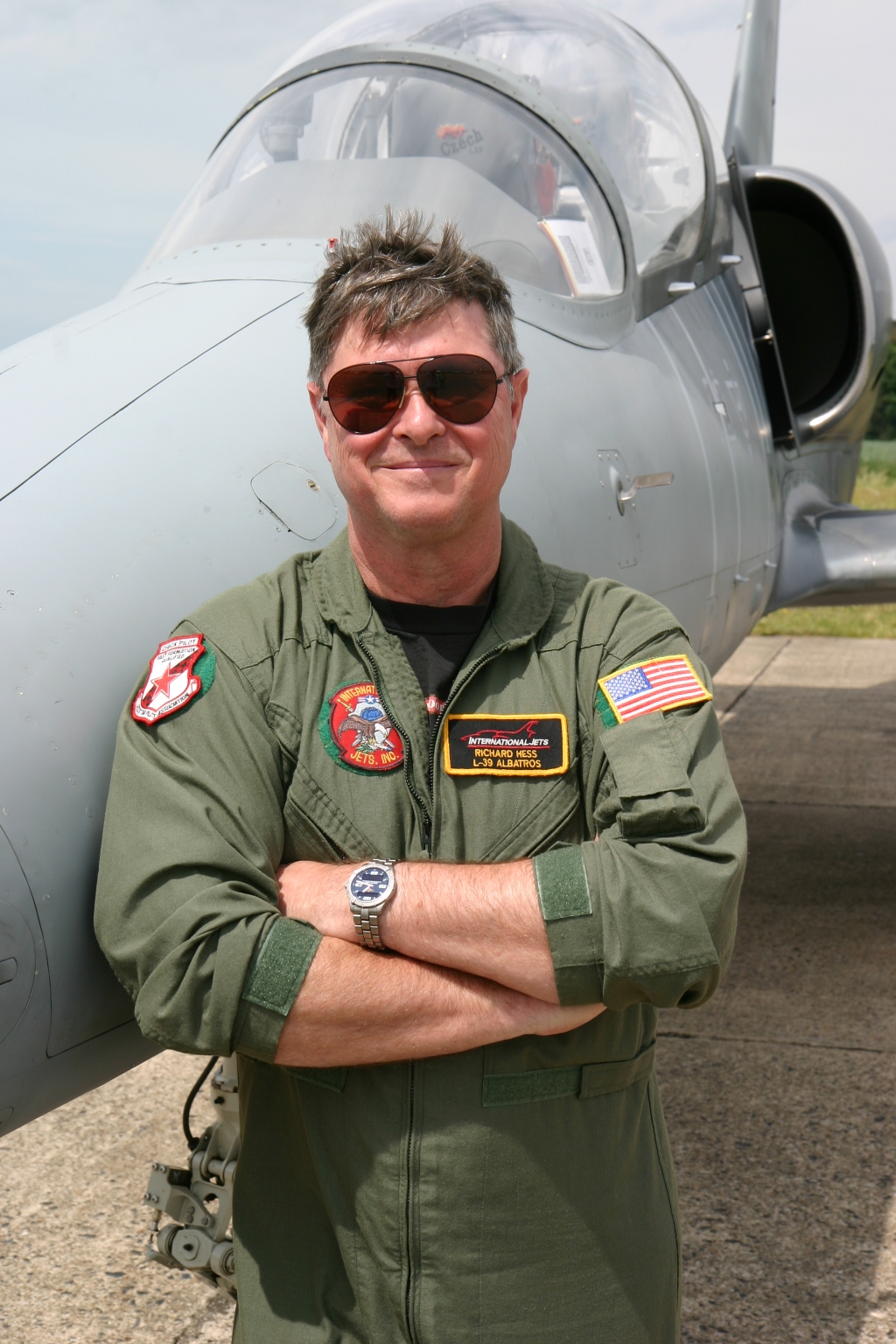
Richard: Sometimes you just get lucky. What else can you say when you get a call to ferry a Canadair CT-133 Silver Star to Stavanger, Norway ENZV? The call came from Paul Keppeler in early May about three weeks before the Sola Airport air show, celebrating 100 years of the Norwegian air force. Since I'd ferried four L-39s to Europe over the last two years, I guess Paul figured I wouldn't have a problem doing it one more time.
Of course, a regulatory process that normally takes four to six weeks would have to be completed in three weeks if we were going to make it in time for the air show. The last piece of the puzzle was a customs form, handed to me literally 30 minutes before departure! Everyone involved deserves credit for making the impossible happen: Courtesy Aircraft, Heritage Aero, Paul, and IJ. We all worked together to handle the hundreds of details in preparation for the ferry.
Once again I used Skyplan for the ferry coordination, flight plans, weather forecasts, and NOTAM documents. It didn't have a T-33 in its computer system, so we used a Cessna Citation 500 as a substitute for the flight plan times. This time I bought most of the survival gear instead of renting it, and Paul borrowed a raft that he managed to fit in the T-33 front seat pack. We were ready to go!
Heritage finished up the annual the Thursday before departure, and Paul and I did a test flight the next day. The airplane was in remarkable shape with only a couple of minor squawks. On Sunday I did a refresher with Carl Schwerman in Paul's aircraft, and we all got a good night's sleep in preparation for a Monday morning departure from Rockford, Illinois KRFD.
Paul: In early May of 2012, when Mark Clark from Courtesy Aircraft informed me he had a "qualified" buyer in Norway for former Royal Canadian Air Force (RCAF) T-33 #599, and it was the desire of the buyer to have the jet on hand for an air show in Sola, Norway, my first reaction was, "This process needs to get rolling a month ago!"
The Sola Air Show would be the first of a number of events commemorating the 100th anniversary of the Royal Norwegian Air Force (RNoAF). Soon afterward, a deal was struck, and Mark asked if I'd be willing to fly the airplane to Norway.
I replied with an enthusiastic "Yes!" and the next call was to my friend and airline pilot colleague Rich Hess, owner of International Jets. IJ is known for its excellent restoration and maintenance of L-39s, as well as foreign military aircraft logistics support abroad.
I know Rich personally, so I am well familiar with his résumé and decades (I like to kid him) of experience as a former USAF pilot, current airline and warbird pilot. Since he had demonstrated the ability and insanity to successfully ferry four L-39s across the Atlantic, trailblazed the bureaucratic and permit process, and is mildly, sometimes wildly, entertaining at happy hour, he was the right choice to join me on this mission.
Rich quickly agreed to do it and immediately began an urgent, effective push to get all the permits and export paperwork done. He got it all done in a seemingly impossible, compressed three-week time frame with the help of his folks at IJ and Courtesy Aircraft.
We busied ourselves with getting survival and emergency egress gear in order. I procured a life raft and received expert help getting it rigged and tethered it according to RCAF tech order manuals to our ejection seat survival container chutes. Many thanks to Sam Cryer from PlaneSafe Aircraft Maintenance for his innovative "MacGyver" skills building up our egress and water survival rigs.
The Ferry: Day One
Richard: This aircraft was overhauled and its avionics upgraded by the Canadian air force in 1997-1998. It has a nice stack with VHF and UHF radios, TACAN, VOR, ILS, and ADF. However, there was no GPS or autopilot, the VHF radio was not 8.33-equipped for EU airspace, nor were we RVSM-compliant. So, we would be restricted to below FL290 unless we could sweet-talk ATC into allowing us to climb higher.
The importance of altitude cannot be over emphasized, as a T-bird is a thirsty beast. It burns about 1,800 pounds per hour at FL270 and cruises at 360 KTAS, as opposed to 1,500 pounds per hour and 420 KTAS at FL350.
I had Skyplan talk to Chicago, Toronto, and Montreal Centers early Monday morning. They each said "no problem" with us flying at FL350. Of course once we got airborne, no one knew what we were talking about. So, the first leg to Quebec CYQB was 804 nm and flown at FL280. With a slight head wind, it was a very tight fuel leg. We had Ottawa and Montreal along the way as alternates, but we managed to arrive in CYQB with 30 minutes of fuel. That would be the tightest leg for fuel for the rest of the trip.
The second leg to Goose Bay CYYR was uneventful by comparison. The leg is 575 nm, and ATC allowed us to fly at FL330. With a slight tail wind we arrived early with lots of fuel. Also, the weather was forecast for rain in Quebec, but Goose was clear and cool. All in all it was a good first day with no aircraft issues. It was time to go to the hotel and eat a well-deserved meal.
Paul: Like Rich said, altitude versus range in the T-33, and with ATC apparently not getting the memo on our pre-cleared high altitude waiver, our first leg at FL270/280 was going be tight fuel-wise. Good news is we had convenient divert options close to our flight path if the fuel situation dictated we land short. This leg would not tolerate delays in climb, an early descent, or marginal VFR weather.
The stars aligned, and other than being held down on final cruise altitude, it worked out perfectly and we made it to Quebec City, Quebec, a scenic region with breathtakingly lush, green rolling hills, almost artfully sculpted farmland geometries and mountains…but no time to sightsee, save for the descent and arrival on this brief fuel stop.
Rich was new to the T-33 and would competently fly leg No. 2 to Goose Bay and get to know the old school Skunk Works jet a little more, and wiggle the touchy ailerons less with each leg! Rich made a nice landing in Goose, where there were still remnants of huge snow banks on the ramp created by plows during the winter.
Day Two
Richard: Day two turned out to be a good day. We were once again restricted to FL270 or 280. The weather was mostly clear for the 675 nm leg to Narsarsuaq, Greenland BGBW, as well as for the 650 nm leg to Keflavik, Iceland BIKF.
I hate to whine, but an autopilot would have been nice just to take a break. Paul and I worked well together, spelling each other from flying this sensitive machine at altitude. The ailerons are hydraulically boosted and super sensitive the higher you fly. Paul has owned an identical T-33 for 10 years, and his precise control was a joy to watch.
Another blessing was ForeFlight for the iPad. For a package price of $225 per year, you get a full U.S., Alaska, Canada, Arctic, and North Atlantic database with maps and charts, plus a worldwide map. Paul and I imported all the European approach charts we needed from an EU website right into the program. With moving map GPS we both had a wonderful tool.
We landed at Kef, serviced and buttoned up the aircraft, and headed into town for the night. We had a nice meal in the hotel and got a good night's sleep. The next day was going to be the real challenge: an 870 nm run directly to Stavanger ENZV, bypassing our originally planned fuel stop in the Faroe Islands EKVG. We would need favorable winds and good weather at destination to pull this off.
Paul: Two transoceanic, high-altitude legs with no autopilot, while bundled in anti-exposure suits, military life preservers, and survival raft container attached to USAF issue chutes…a challenging mission in a challenging environment.
We were greeted with mostly fair skies, jet contrails above our lowly FL270 and the cold North Atlantic below. With apologies to the Garmin folks, hand-flying a T-33 at high altitude is like balancing a bowling ball on a pencil, so any navigation system requiring extra keystrokes increases workload significantly. We did carry a portable Garmin GPS for backup in addition to our two iPads. As we approached the old World War II stopover field in Narsarsuaq, Greenland, on the first leg out of Goose, I noted an undercast off the coast, but Rich reassured me he could see beyond that to the area where the airfield was, and it was CAVOK.
The arrival requires you to meander up a fjord, then a sharp right turn to land on a steep uphill runway where they were calling 10- to 15-knot tail winds. Rich and I agreed it was better to take gravity on our side and concede the tail wind. The jet stopped easily on the uphill 6,000-foot runway, and we made a brief stop only to refuel, file our flight plan, hit the water closet, eat a power bar, and waddle around in our anti-exposure suits in the sunny 50-degree, almost-summer day.
Just walking around, performing preflight and refueling duties in those heavy, bulky suits sapped a lot of energy, and we had to take care to stay hydrated and nourished…all of it a reminder why the military hires 22-year-olds to do this stuff!
Takeoff was downhill with a head wind and cool temps so that was ideal…so long as we didn't have to abort. We had a detailed discussion of "What if?" which included one choice on the dial-a-disaster menu of overriding the landing gear downlock and sucking up the gear if it looked like a high-speed abort wouldn't allow the airplane to stop on the available runway surface short of the icy waters.
We accelerated rapidly after takeoff, made a 180, overflew the airfield, and began our climb out to Keflavik. Nothing to see but an unbelievably scenic vista of glaciers, snow, and ice-capped mountains…sensory overload that in other circumstances would give way to daydreaming the origins of the good Earth…but back to the task at hand.
The old RCAF jet performed extremely well, and we arrived to CAVOK weather at Keflavik and parked on the old military tarmac that dated back to World War II, the Cold War days of USAF air defense F-89s, F-102s, F-4s, F-15s, and NATO exercises. We were dog tired but satisfied with the mission safely accomplished to this point.
Day Three
Richard: We awoke to another beautiful day in the North Atlantic. The weather was forecast to be rainy in the Faroes, and the runway at Vagar Airport EKVG is quite short. The T-33, at 15,000 pounds with full fuel, baggage and two pilots, is not the best performer. We really didn't want to go there unless it was absolutely necessary. We also wanted to avoid EU airports as they would require significantly greater liability insurance.
The weather at Stavanger was quite good with broken clouds at a few thousand feet. We also had a slight tail wind forecast. Best of all, Martin Tesli, the new owner of N865SA, had coordinated with Bodo Oceanic and Stavanger Control for FL350. When we got airborne from Kef we just passed the request to Iceland Control and were quickly approved.
Again, not to whine, but that was the toughest leg of the journey. The cabin altitude was more than 30,000 feet. Obviously the pressurization system needed to be reworked. The oxygen system was force feeding us, making it very cumbersome to breath. After an hour I was ready to descend to FL270, but Paul and I talked about it and hung on at FL350 for two hours. At one point I mentioned that we were using oxygen at too fast a rate. Paul said his mask had a leak so he flew that leg with one hand on the stick and the other holding his mask tightly to his face.
We landed with 1,600 pounds of fuel and 60 psi of oxygen. We both commented at how thankful we were to have that leg behind us. We were scheduled to arrive at 1330L. In fact, we arrived 15 minutes early. Not bad in a 54-year-old, single-engine jet aircraft. The only squawks were the pressurization system and an intermittent canopy electrical problem that we finally traced to the micro switches on the nose doors. A little lubricant, and that problem was fixed!
Paul: We finally got 35,000 feet, or FL350, for the Keflavik-Stavanger Norway leg, the "happy place" cruise altitude for the T-33 in terms of range, 1,000-plus nm; speed, 430 knots/0.70 mach; and relative fuel efficiency, 230 gph.
I flew the last leg and luckily discovered loose straps on my leaky oxygen mask were the culprit for the rapid depletion of our O2 system. That was an easy fix as I tightened the bayonet clips fabric straps on the mask but held it tight to my face with one hand to be sure.
Our cumulative fatigue was apparent as we didn't chat much in the not-very-pressurized cockpit cruising at FL350 with the oxygen regulators pressure breathing or force feeding us O2 — a challenging physiological environment.
Once we descended to FL330, the regulators stopped pressure breathing, which was a relief. Rich's discomfort was made even more acute with his anti-exposure suit wrist and neck cuffs being really tight, so to say the least, we were ready to be on the ground in Norway.
Rich coordinated for direct navigation that eliminated a dog-leg and extra mileage in our route. He also politely but assertively persuaded Stavanger ATC to give us direct to the field for a visual approach and not a 15-plus mile long and wide radar pattern they were intending, one seemingly set up more for a 747 on an instrument approach.
Weather for our arrival was excellent VFR, and I shot a straight-in behind a German air force C-160 Transall. We were greeted by enthusiastic retired and current RNoAF personnel as well as Sola Air Show volunteers. The only flying T-33 based on the European continent had arrived!
Sola Air Show
Richard: The pain of the pre-departure planning and the actual ferry were behind us. Now we needed to get ready for the air show. Paul had a daughter graduating high school that weekend so he had to leave on Friday. He certainly was disappointed, but family comes first.
I flew a ride with Rolf Meum on Thursday morning. Rolf and I were squadron mates at Sheppard AFB in the Euro NATO Joint Jet Pilot Training (EN-JJPT) program in the mid-'80s. I gave him his re-qual and he gave me my DA (low altitude waiver) for all of Europe. Then he and I flew to a fjord that afternoon and formed up with an F-16 flown by the new owner, Martin "TinTin" Tesli.
This was the first time Martin saw his aircraft as he bought it sight unseen from Mark Clark! A trusting soul, I'd say we didn't disappoint TinTin. It is also now the ONLY T-33 in Europe, and Martin already has a number of invites to air shows this and next year. I might even get to fly it to Duxford in September. Now wouldn't that be a hoot!
Paul left for home early Friday morning. I stayed and flew once each day for the Sola Air Show. The weather was 1,500 feet overcast on Saturday, making for a challenging performance, but Sunday was crystal clear. It was a really neat show with some truly different airplanes.
We saw a host of Saab aircraft including the Viggen, which has a license-built P&W JT8D with afterburner and reverse thrust! They also had the new Grippen and a Euro Fighter as well. The Turkish Stars in the F-5 and the NoAF F-16 performed incredible shows.
Paul: Immediately upon our arrival it was evident preparations were underway for the Sola Air Show. We watched the impressive Turkish air force Stars F-5 demo team practice their routine as well as a steady stream of participant aircraft arrivals such as a de Havilland Vampire, a pair of RNoAF F-16s, and two Polish air force MiG-29s.
Rich and I met his former NATO pilot training squadron buddy and retired RNoAF pilot Rolf Meum, and we began discussing preparations to get Rolf recurrent training in the T-33, and Rich qualified for low-level aerobatics. Rolf is also an accomplished warbird pilot with an impressive list of World War II fighters and Cold War jets in his logbook.
The next day the three of us did a review of T-33 systems and procedures as a primer to Rolf's recurrent T-33 ride, which he predictably executed like a pro! On a subsequent flight, the T-33's new owner Maj. Martin TinTin Tesli would rendezvous with and see his jet for the first time from the cockpit of an RNoAF F-16. After landing, his excitement was infectious and he marveled at the sheer size of the T-bird.
I left the day before the Sola Air Show to be home in time for my daughter's high school graduation, which was a wonderful day for my family. As I flew home across the Atlantic reclined in the seat of the KLM 747, I was thankful first for my new Norwegian friends who showed us generous hospitality and a shared enthusiasm for warbirds…not to mention the cushy, comfy airline seat, premium meal service, and entertainment system!
Germany
Richard: I was supposed to take my wife on a weeklong vacation to Germany the week that Paul and I ferried the T-33. During the Sola show Martin asked if I could fly the Bodo show the following weekend. Bodo is north of the Arctic Circle and a starkly beautiful place. What could I say but "Heck, yes!" However, I would have the five intervening days to make it up to Rosann, so we met on Monday morning in Frankfurt.
We took the ICE (high speed rail) to Dresden where we were met by Bernd Rehn. Many of you know Bernd as the chief engineer for the former East German L-39 fleet. He is very busy with L-39s, MiGs, and helicopter work. But Bernd was gracious enough to take a few days out of his busy schedule to play tour guide.
We spent a day in Dresden, looking over the city and visiting a museum. There were many war exhibits. The people from Dresden suffered a devastating night of firebombing during World War II that killed more than 100,000 residents. I would say they have a unique view about the effects of war.
The next day was spent in Goerlitz on the Polish border. Bernd told us some of the history of this area, which has been hotly contested for centuries. We walked across the bridge into Poland, toured a huge, old church, and then drove to a former MiG base where Bernd and others have a tidy flight museum filled with MiGs, Soviet era helos, Delphins, Albatrosses, and even an Alpha Jet. It was a unique look at German Cold War equipment.
The last day, we drove to the national park in Bastei. There is a beautiful view of the Elbe River Valley 1,000 feet below. Not satisfied with just looking, Bernd insisted we walk the trails down to the river and then walk back up. He is a tough bird. I was the one asking for breaks to catch my breath! Then it was the ICE train back to Frankfurt for our flights out on Friday.
Bodo Air Show
Richard: Rosann flew Lufthansa home, and I flew back to Stavanger on Friday. Martin and I then flew the T-bird the 555 nm to Bodo ENBO. The weather was undercast for the first half of the trip but nice and clear thereafter. When we arrived south of Bodo an F-16 was practicing his show routine so we held 25 nm out. As planned, a pair of de Havilland Vampires joined on our wing for a photo shoot. However, our fuel was getting short, and I finally had to insist that the tower let us land. Again we landed with 30 minutes of fuel. The T-33 is simply not a jet to be cavalier about fuel.
The weather was quite good with at least a 5,000-foot ceiling each day, and I enjoyed putting the T-33 through its paces. All the Saab aircraft flew as well as the Belgian F-16 and Italian Marchetti demo teams.
On Sunday evening, Martin and I were invited to fly on the Red Bull DC-6. This was once Marshall Tito's executive transport. The experience cannot be described. Both the DC-6 and the P-38 Lightning that Red Bull brought to the show were absolutely pristine, inside and out. We flew over a glacier with the most incredible scenery. I will never forget that flight.
After the DC-6 ride, Martin and I fueled the T-bird and flew it to Orland Airport ENOL, about 215 nm south of Bodo. It was now 2300L and still amazingly light with the sun 20 degrees above the horizon. We flew low-level VFR, and I think we visited every glacier, mountain peak, and little airport on the flight south. We landed at the military field and were met by a half-dozen of TinTin's friends.
The final part of my journey was not over yet. Martin arranged for a 17-year-old newly minted private pilot to fly me to Trondheim Airport ENVA in a Piper Cherokee so I could catch a flight to Amsterdam the next morning. The kid did just fine. The weird thing was to land at midnight and it still was quite light outside!
Conclusion
Richard: This really was an excellent adventure. The airplane performed wonderfully. The scenery was amazing. The people could not have been nicer. It's a country of five million people. Heck, that many live in Atlanta alone! They are very much like Americans in term of humor and commitment to defense. I truly enjoyed spending time in Norway and look forward to going back. What really impressed me were how many former air force people flew or maintained this type of aircraft. It meant something to them to have one flying again. Of course they want Martin to paint it in NoAF colors!
Once again I found myself very focused on the details of the mission. There are so many factors that have to be considered just to perform the ferry: fuel, routing, altitude, weather. The hardest part was all the pre-flight planning. Mark and Kathi at Courtesy, Cliff and his crew at Heritage, SkyPlan, Paul, IJ's Kathy, and I really hustled for three weeks to get all the permissions and paperwork needed to legally depart the U.S. It took all our efforts to make this happen in such a short time. My thanks to everyone involved.
The air show circuit is alive and well in Europe in spite of high operating costs and heavy government oversight. It is gratifying to see the same passion for warbird flying as we have here in the U.S. I am honored and humbled to have been a part of Norway's 100th air force celebration. I hope some of you reading this article will have the pleasure of a similar experience in your future.
Fly safely and always check six!
Paul: The old RCAF T-33 #599 performed very well, a compliment to the folks at Canadair who built her, the RCAF who kept her in top condition, and the outstanding warbird maintenance guys at Heritage Aero who made sure she was ready to cross the Atlantic.
I made some great new friends in Norway. Among them were new T-33 owner RNoAF Maj. Martin TinTin Tesli, and retired RNoAF and prominent warbird pilot Rolf Meum. I hope to return later this summer to see them and fly TinTin's T-Bird in the Oslo Air Show.
Many thanks to my friend Rich Hess for the outstanding coordination, "pushing" paperwork, collaboration, teamwork, and fun on this mission! I know Rich and I share the desire to reciprocate the gracious Norske hospitality and have Rolf and Martin be our guests here in the States, especially during EAA AirVenture Oshkosh or some other big warbird event so we can share some more flying and raise another glass and say, "Skal!"
Now if Courtesy Aircraft can just sell a two-seat F-5 across the pond…


Comments