Flying High in West Africa
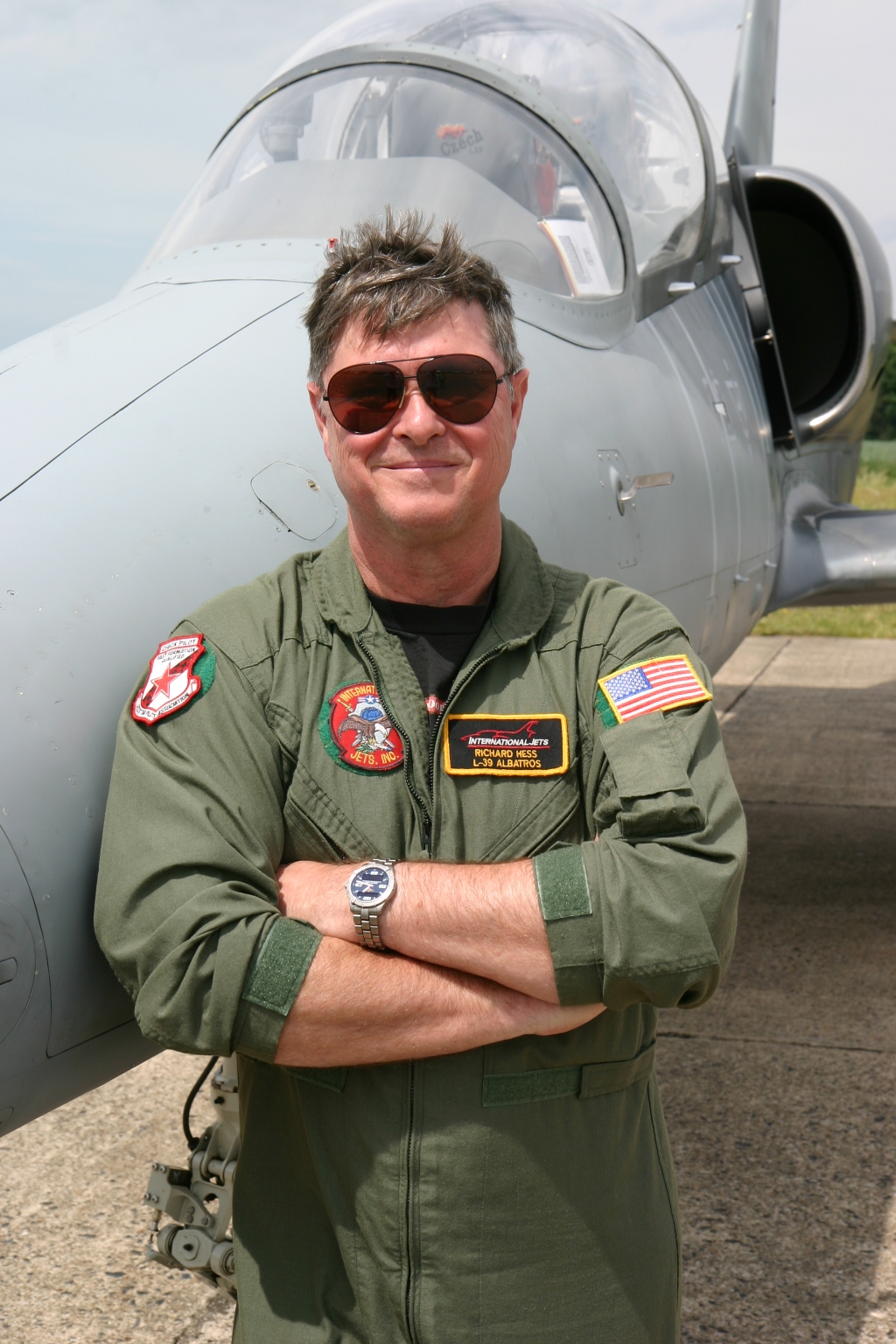
About four years ago the Nigerian embassy in DC sought us out at International Jets and asked for parts support for their L-39ZA fleet. One thing led to another and IJ is now heavily involved in reconstituting and maintaining Alpha Jet, L-39 and other fleets for the NAF. I am particularly proud of NAF's recent involvement with the Mali operations along with the French Air Force.
Doing foreign military contracts is a whole different world from domestic Warbird operations. It involves a close and VERY structured relationship with the US State Department and DOD. It also means maintenance procedures, parts, and training must closely follow OEM specifications. To say it has been an education in itself is an understatement.
Our work is extensive and involves every facet of a military base of operation. We are involved with inventory management, parts sourcing, pilot and technician training, aircraft maintenance, and flight testing. It is this last responsibility I want to address in this article.
As the president of IJ, I try to do most of the aircraft flight testing needed as aircraft work is completed. I now have about 3000 hours in military aircraft from 9 foreign countries, with half that time in the L-39.
I was in Nigeria flight testing Alpha Jets two years ago. I laughed at myself the first time as I called for taxi, "Nigerian Air Force XXX taxi." Ten years ago, if you had told this middle aged white man I would be doing this work as I approached 60 I would not have believed you but here I am!
Just this month IJ had a fun weekend Jet Blast. We had a moderate turnout and decent weather. That Sunday I was on my way to Lagos to test fly three L-39s which we had returned to service with fresh annuals, multiple repairs, and overhauled engines and saphirs.
It's a long, 12 hour flight to Lagos, a couple of hours wait for a connection flight, and a short two hours to Kano in the north. Off to the hotel and a good night's rest and then to the flight line for the first test flights.
These ZAs were built in the mid 1980s but all have relatively little flight time, less than 2000 hours each. However, the near desert environment, constant dust, and furnace like temperatures certainly take their toll on both airframe and crew. Both days of the test flights were 42C or 107F. By 1500 each day I found myself walking anywhere at the speed of molasses. Desert heat is still draining!
The first flight for each aircraft involved a thorough review of logbooks and an aircraft inspection. Ground ops are very thorough also as all systems are tested and the engine is checked for normal response and operation from idle to max. Then a long, slow climb to FL280 where again, every system is thoroughly tested for proper operation under the dynamics of in flight vibration and density changes.
While I punished the airframe from stall to MMO, the priority was to ensure the engine would perform under every conceivable operation the pilot could ask of it. Idle, max and "slam" tests were done at 15, 20, 25 and 28,000 feet. By the way, at 42C, a climb to FL280 typically took 30 minutes! Patterns and touch & go landings were done to further exercise the engines. After all, Kano is a UPT base where new student pilots get to abuse their steeds every day!
The aircraft were again thoroughly inspected after this first flight and any noted discrepancies were addressed. There were actually very few airworthy issues. The first flights were done with Marti Veit as my flight test "engineer." I flew with an IP from the base on the second flight to exercise the engines and airframes under extreme maneuvering and to act as the "acceptance" pilot for NAF.
The second flight is where we started to have fun. I went beyond the OEM test card requirements, doing a profile I'd developed over the years. I figure if the aircraft can pass my inspection then it will stand up safely to the student pilots. We flew to the local MOA and did a full series of classic aerobatics, max roll rates, and G forces from .5 to 4. Then I'd pick up some speed and perform 5 G, then 6 G maneuvers, ending with a -1 G bunt. Lastly, I exercised the engine and airframe with zero airspeed bunts, deep stalls and spins. After each maneuver, we'd check full engine parameters and response.
Return to the traffic pattern usually included a request for five minutes of "maneuvering." God, I love this job! All in all, I did six flights in two days and logged 6.4 hours of flight time.
I want to give particular thanks to Marti Veit and Camilo Louhau. They really did a great job prepping the airplanes. Also, the maintenance unit commander, Group Captain Sebastian Tupkop, gave us unlimited support so we could complete our work efficiently and on time.
I love the work we do at IJ for our Warbird clients. It is impossible not to become friends with the people you share such a passion with. However, after 28 years in the USAF and ANG, and participation in 9 war zones and relief efforts, I can't help but feel a real sense of accomplishment with every NAF aircraft we put in commission. This is very rewarding work for me.
Thanks everyone for taking the time to read this article. I hope it was both informative as well as entertaining. Not every opportunity in life is in a garden spot. Lastly, give very serious thought to conducting test flights and consider carefully the operation it is intended to support.
Remember to fly safe and "check six" often!
Richard "Mongoose" Hess


Comments