Jambo Uganda
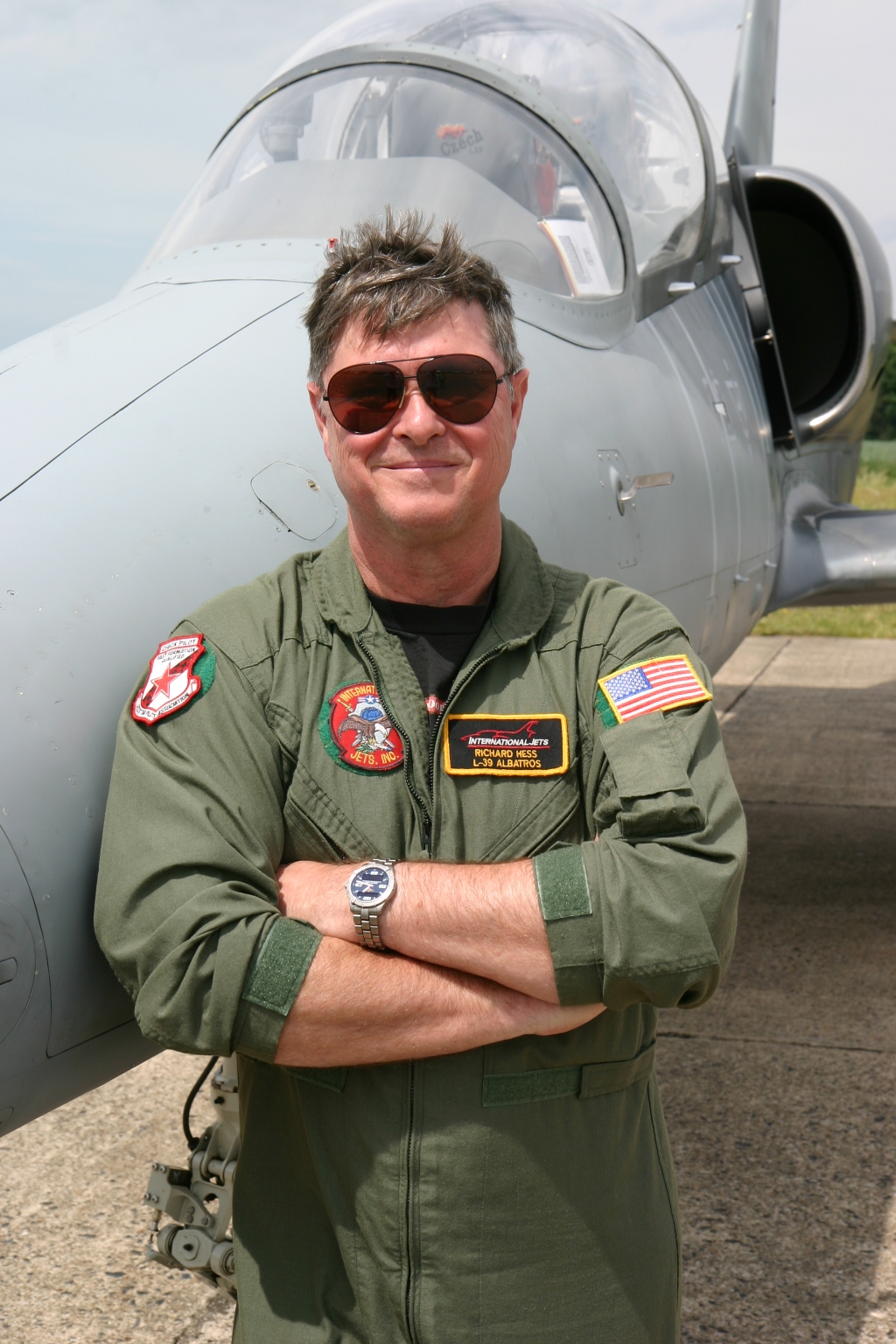
Those of you who follow my travels know that I've delivered airplanes to, and spent time in, some interesting and out-of-the-way places. May 2017 was no different. The Ugandan People's Defence Air Force (UPDAF) operates small fleets of Italian SF-260 trainers and Czech L-39ZA trainer/ground attack aircraft, Cessna 208 utility aircraft, Russian Su-30 fighters, and four types of Russian and American helicopters.
Aerodyne in Prague was contracted to manage the overhaul and avionics upgrade for two of the six L-39ZA aircraft. My role was that of test pilot. Chuguyev and Motor Sich in the Ukraine handled the airframe and engine overhauls, while Martin Veit of Aerodyne designed and installed the new Garmin avionics package. Aerodyne attempted to arrange for me to do the factory test flights but the Ukrainian Ministry of Defense insisted their own pilots perform that function. Instead, I was contracted to travel to Gulu in northern Uganda to do the final assembly test and acceptance flights.
Ugandan History
Uganda is a very interesting place. It is part of the East African Great Lakes region. Completely land-locked, it is bordered by Sudan to the north, Kenya to the east, Democratic Republic of the Congo to the west, Rwanda to the southwest, and Tanzania to the south. A fair portion of northern Lake Victoria is part of Uganda.
Uganda has an estimated population of 38 million people. English is the official language but most people speak the Bantu family of dialects including Swahili. The ancestors of Uganda belonged to the Buganda, Toro, Ankole and Busoga kingdoms. Arab traders moved into the area in the 1830s, followed by Anglican and French Catholic missionaries in the 1870s.
In the 1880s, the Imperial British East Africa Company (IBEAC) was chartered to negotiate trade agreements in the area. However, a number of religious wars also occurred during this time between Muslims and Christians, and then between Protestants and Catholics. Britain wanted to protect its Nile River trade route so in 1894 it annexed Buganda and the surrounding territories into the Uganda Protectorate.
British rule lasted until 1962 when Uganda won its independence. Idi Amin successfully executed a military coup in 1971 and ruled as a military-supported dictator until 1979 when he was ousted by Ugandan rebels and Tanzanian forces. His bloody rule cost the lives of tens of thousands of his countrymen.
Everyone remembers the Israeli rescue mission in 1976 when Palestinian terrorists hijacked an Air France flight and held 100 passengers at Entebbe Airport. Yonatan Netanyahu, the brother of the current Israeli prime minister, was the only Israeli killed during that daring raid. I can't help wondering if the UPDAF operates the Su-30s today with that rescue mission in mind.
Yoweri Museveni became Uganda's president in 1986. He has sent Ugandan forces into the Congo and participated in other conflicts in the Great Lakes region. Uganda fought a long, frustrating insurgency in the north against the Lord's Resistance Army (LRA) until recent years when the United States military starting helping the UPDF track down these elusive guerillas. The LRA was particularly reviled for their crimes against humanity that included child slavery and many mass murders that resulted in thousands of deaths and millions of displaced people.
Geography and the Economy
Uganda is an incredibly beautiful place. The land is very lush and green. At an elevation of 3500 to 4000 feet, the southern part of the country is made up of verdant hills that give way to endless expanses of rich savanna as far as the eye can see in the north.
After a grueling trip of 24 hours to get to Kampala, I drove 330 kilometers the next day to Gulu where the L-39s are based. The roads are very well maintained and we passed through numerous small villages along the way. It was obvious that Uganda is very self-sufficient when it comes to agriculture. The entire drive had views of extensive farms of rubber and pine trees, corn, beans, and many other food crops. We stopped at one roadside stand for an endless selection of mangos, lemons, limes, and melons.
The highlight of the drive was the bridge over the Nile River. The rapids were huge and extended a great distance both up and down river. I tried to imagine 19th century explorers navigating such a natural power with brute force.
Uganda actually has extensive untapped resources of oil, natural gas, and base metals. However, more than half of their economy is made up of agricultural products with coffee being their largest export. I noticed the rural areas are very poor, with the average village dweller living on less than two dollars per day! Compared to Kampala, the life styles are a study in contrasts.
Gulu
We drove from Kampala to Gulu on a Sunday morning. Traffic was light and we soon passed out of the northern suburbs. The main road to Gulu has recently been resurfaced by a Chinese contractor and I was impressed with the quality of the work. After nine years of working throughout Nigeria and seeing their roads, I was impressed with the Uganda road system and feeling of security.
The drive took about four hours to cover 330 kilometers. Something else I noticed was how many Westerners were out and about on foot, in cars, and on motorcycles and bicycles. Gulu has about 400,000 residents, making it four times smaller than Kampala and the seventh largest city in the country. Scheduled air service only occurs twice a week so driving is the only real option.
Malcolm International, the prime contractor, arranged for us to stay at the Acholi Inn, a nice hotel in town. The settled security situation was evident by the single armed guard at the entrance. By comparison, when I would travel to Kano in northern Nigeria, the presence of Boko Haram required us to stay in a walled and guarded compound. The Gulu hotel was comfortable with good air conditioning, a nice pool and a full service restaurant. Test Flights
I hit the ground running on Monday morning. Martin Veit and Camilo Louhau from Aerodyne in Prague preceded me by a couple of weeks and already had the two aircraft assembled and ground tested. I would fly the manufacturer's test profile as well as do a full function test of all the new avionics. It was interesting to see that the UPDF had a company of soldiers bivouacked on the airport grounds with a pair of older Russian tanks and other wheeled equipment.
The L-39 unit commander arranged for my test area to be north and south of HULU Airport 40 nm and up to 100 nm east. There was very little air traffic to contend with and I had the airspace up to 40,000 feet. A team of Bulgarians are contracted to fly the other four aircraft and train the Ugandan student pilots so other than avoiding their specific training areas, I had the whole of northern Uganda to myself.
To Marti and Camilo's credit, both aircraft performed nearly flawlessly. The overhaul factory in the Ukraine wanted to send a team of ten technicians for a month to assemble and test the two aircraft. Marti and Camilo did it themselves in two weeks. Of course they had assistance from the UPDAF technicians.
The factory test profile takes about 1.5 hours and requires you to fly in stages up to 28,500 feet, with stops at various altitudes to check systems and do engine acceleration tests and record various power settings. Then you do a high power dive to 16,000 feet to test maximum Mach and automatic speed brake deployment. After that I do a full set of stalls and aerobatics to again test all systems, trim and balance under dynamic conditions. Marti flew back seat as my flight test engineer on Day 1. He and I have been doing this routine for years on multiple continents and work very well together.
Day 2 was a series of five short flights in both aircraft to test mostly minor repairs and adjustments. We had a few minor wiring issues for the new Garmin avionics and needed to adjust the rudder and aileron trim on both aircraft. I flew most of these five sorties solo, coming back to the pattern for a few aerobatic maneuvers for the troops to see. God, I love this job! By the end of Day 2 both airplanes were perfect.
We spent Day 3 reviewing and filling out all the paperwork that goes with this test activity and gathering all our equipment in preparation for our departure the following day. We planned for a full week of test flying but only needed half a week to complete our work. I even had a little time to relax poolside before we left on Thursday morning for the drive to Kampala.
Leaving Uganda
The drive back to Kampala was very relaxed. Malcolm International assigned us a driver and a brand new Toyota Land Cruiser with all the bells and whistles. We even stopped by a roadside fruit stand. Again, the rural areas may be very poor but I was impressed with how their agriculture is a horn of plenty! Another fascinating sight was a tall truck full of cattle on their way to market. The horns are impressive and they tie the tails and horns to the roof structure to keep the cattle in place. With two guys riding on top it was a sight to see!
Both on my late night arrival in Kampala and during the return, Malcolm International set us up at the Imperial Royale Hotel. This is a very classy place with spacious rooms and gracious employees. We had a late lunch on arrival then I took a nap for a couple of hours. I intended to have dinner with Marti and Camilo before leaving for Entebbe Airport but my driver said the traffic was very bad so I skipped dinner and we left at 6 pm, five hours before the KLM flight to Amsterdam.
Good thing we left early because this 50 kilometer drive took us nearly three hours! The traffic was just terrible, a late afternoon, bumper-to-bumper rush hour out of Kampala. We finally got lucky when an Air Force vehicle drove past us with his official lights rotating. Little did I know that Malcolm International's company vehicles all have the same lights! My driver turned them on and hung right on the back bumper of that Air Force vehicle!
The check in at EBB Airport was completely uneventful. However, it still took me an additional 30 minutes to check in, clear the security check point and walk to the business class lounge. The flight left on time, arriving in AMS about eight hours later in the early morning. I had two hours to make my connection to ATL and home, leaving me the weekend to enjoy with family.
Conclusion
I've had the wander lust my whole adult life. Flying 777s for my airline and then adding these military/Warbird adventures fills me up and satisfies my crazy, intense needs. At the tender age of 63 I know I'll have to give this up someday, just not anytime soon please! I'm having too much fun!
I really appreciate working with great technicians and having the chance to meet different and interesting people all over the world. For me, it shrinks the world. Yes, people can have different languages, different cultures, different foods, and different ideas. And yet, I find that I can talk to the people I meet and always find something in common. It usually involves family, hopes and desires, and faith in a better tomorrow. I am truly blessed and richer for the places I've been and the people I've met.
Aerodyne did a great job with these two L-39s. I expect they will have an opportunity to do the same overhaul and upgrade work for the remaining four aircraft. When that happens, I'll be ready to do my part. Until then, I'll just have to remember this latest adventure with a smile on my face and nakushukuru on my lips…
Richard "Mongoose" Hess


Comments